Question 4.1 - CONCEPT SELECTION - 3 CONCEPTS
Im my selection matrix, I have a scale of 0 to 5 where 0 being the least favourable to 5 being the most favourable.
| Concept Selection Matrix | ||||||||||
| Concepts -----> | A | B | C | D | E | F | G | H | I | J |
| Criteria | Push - Trap - Release | Twist - Scoop - Drop | Slide - Release | Pull - Trap - Drop | Pull - Escape | Twist - Escape | Grab - Release | Push - Pull - Trap - Release | Twist gear - Trap - Release | Twist - Trap - Release |
| All sizes of salt grains | 4 | 4 | 3 | 4 | 4 | 4 | 4 | 4 | 4 | 4 |
| Controls amount of salt dispensed | 4 | 1 | 3 | 4 | 4 | 3 | 0 | 4 | 4 | 4 |
| Salt dispensed is visible | 5 | 4 | 4 | 5 | 5 | 5 | 5 | 5 | 5 | 5 |
| Low Cost | 4 | 1 | 4 | 4 | 4 | 4 | 5 | 3 | 3 | 3 |
| WOW | 4 | 3 | 3 | 4 | 4 | 5 | 3 | 4 | 3 | 3 |
| Elegance & Beauty | 4 | 3 | 3 | 4 | 5 | 4 | 4 | 4 | 3 | 3 |
| NET SCORE | -> 25 <- | 16 | 20 | -> 25 <- | -> 26 <- | -> 25 <- | 21 | 24 | 22 | 22 |
| Concepts -----> | A | B | C | D | E | F | G | H | I | J |
I will be exploring the following 4 prototypes.
A : Push - Trap - Release
D : Pull - Trap - Drop
E : Pull - Escape
F : Twist - Escape
Question 4.2 – PROTOTYPING
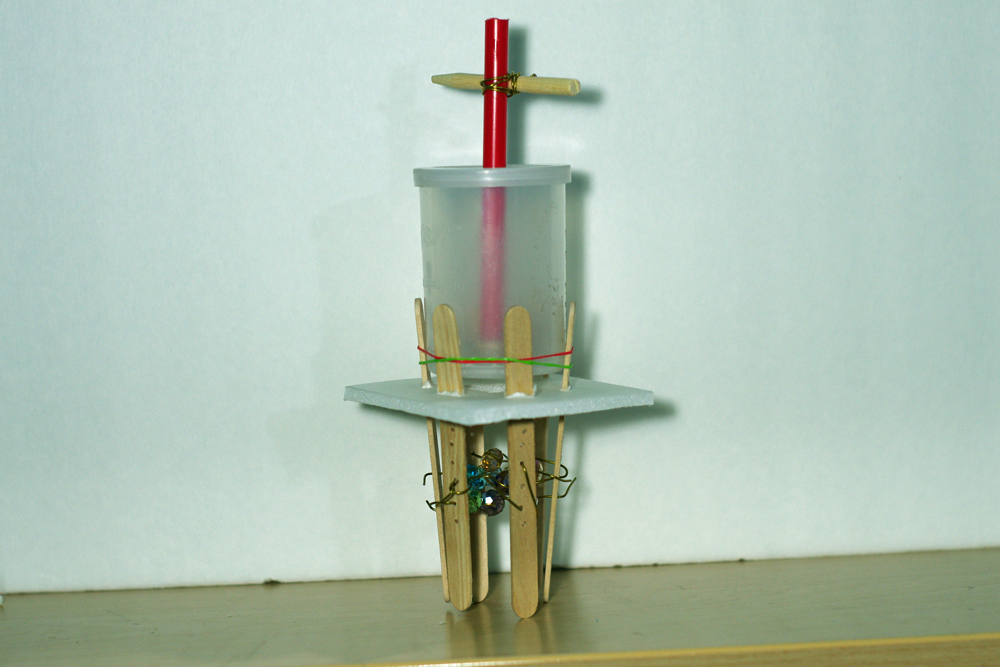
A : Push - Trap - Release
There are grooves on the middle shaft. Salt is trapped in these grooves. When you push the top, the shaft is pushed down which takes the salt with it in the grooves. As soon as the grooves clears the salt container, the salt in the grooves is released due to downwards facing slope of the grooves. The salt falls on the distribution cone which has holes into it. The salt passes thru various holes and that's how it is randomly distributed on the food below. The amount of the salt dispensed can be changed by adjusting the travel of the shaft which can be adjusted. More travel means more grooves can come out of the container so more salt will be dispensed. Less travel means less grooves can come out of the container so less salt will be dispensed.
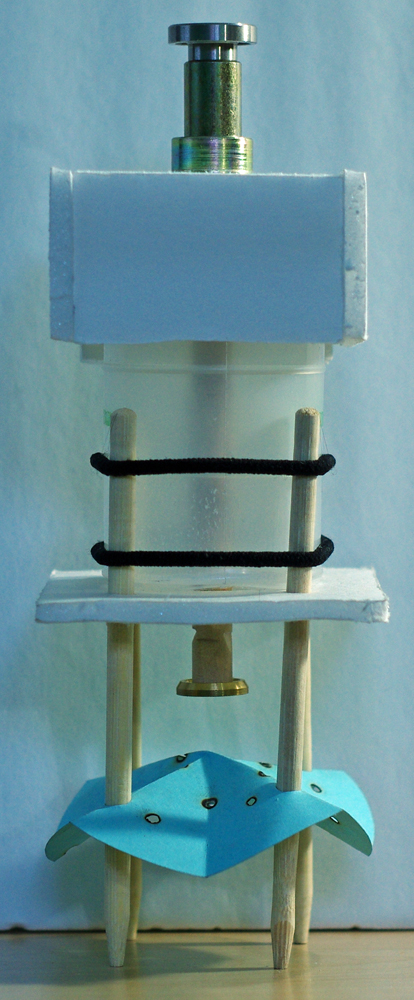
D : Pull - Trap - Drop
There are grooves on the central shaft and each groove is on the whole circumference of the shaft. The shaft is inside a hollow tube inside the salt container. The hollow tube has holes on it. The salt passes thru the holes on the tube and occupies the space of the circumferential grooves. When the shaft is pulled, the grooves comes out of the salt container from the top. The salt is released due to downwards facing slope of the grooves and falls on the top cone. The salt slides down from the cone and falls on the distribution cone which has holes into it. The salt passes thru various holes and that's how it is randomly distributed on the food below. The amount of the salt dispensed can be changed by adjusting the travel of the shaft which can be adjusted. More travel means more grooves can come out of the container so more salt will be dispensed. Less travel means less grooves can come out of the container so less salt will be dispensed.
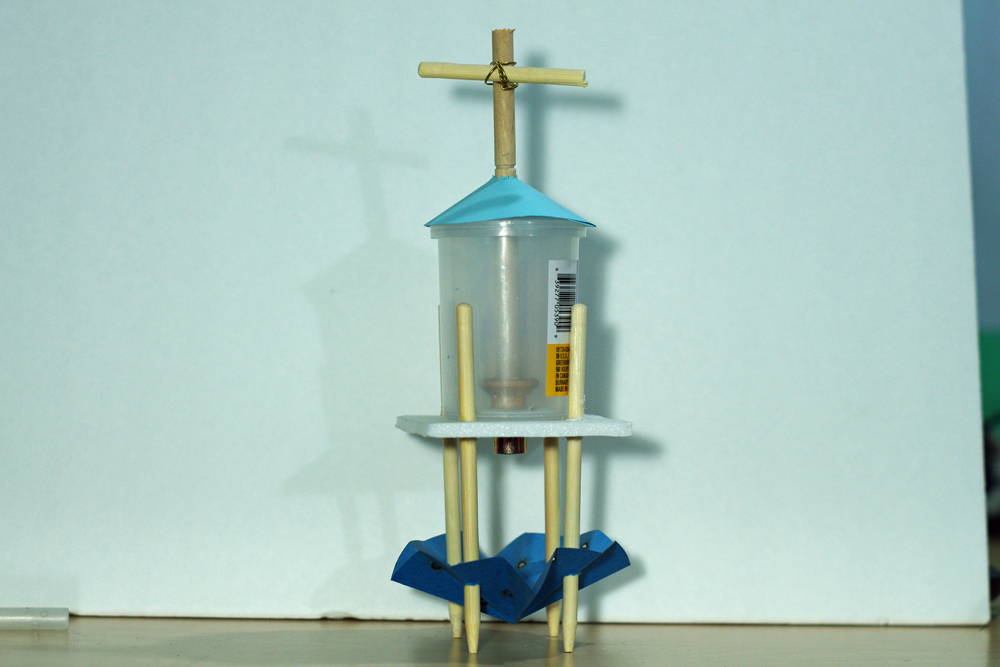
E : Pull - Escape
There is a central hollow tube which is inside a second hollow tube inside the salt container. When the central hollow tube is pulled, salt passes thru both tubes only when the randomly drilled holes align on both tubes. That’s how the salt comes out of the container and passes thru the central hollow tube and falls on the distribution system. As I cannot find the right size cones, I have used beads and made a kind of web of beads. The salt falls on the top bead and to the next layer of beads and the last layer of beads there by randomly distributed over the food. Masking the outside tube would change the amount of salt being dispensed. Masking a longer length of the outside tube would allow only a few holes on this tube that can be aligned with the holes on the central hollow tube. This means less salt can come out of the holes. Masking a shorter length of the outside tube would allow more holes on this tube that can be aligned with the holes on the central hollow tube. This means more salt can come out of the holes.
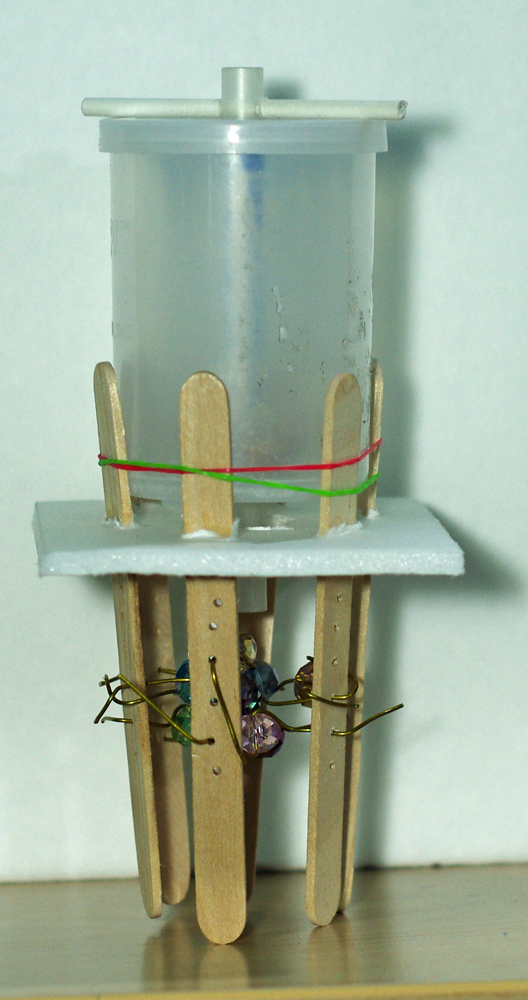
F : Twist – Escape
This is similar to E (Pull – Escape) with the following differences.
The central hollow tube is rotated. The holes on this tube are equally spaced in both ways, circumferential and axial (holes are in helical configuration). A 360 degree turn would engage all holes of the central tube with holes on the outer tube there by delivering the maximum salt. Less than 360 degree would engage fewer holes of the central tube with holes on the outer tube there by delivering less salt.